
AI in Communications: The Next Chapter from Productivity to Trust and Authenticity

Earlier this year, we shared our view on how AI is transforming the communications industry and why the real advantage lies in being AI-powered and human-led. Since then, the pace of change has only accelerated, and the questions from our clients and teams have gotten sharper.
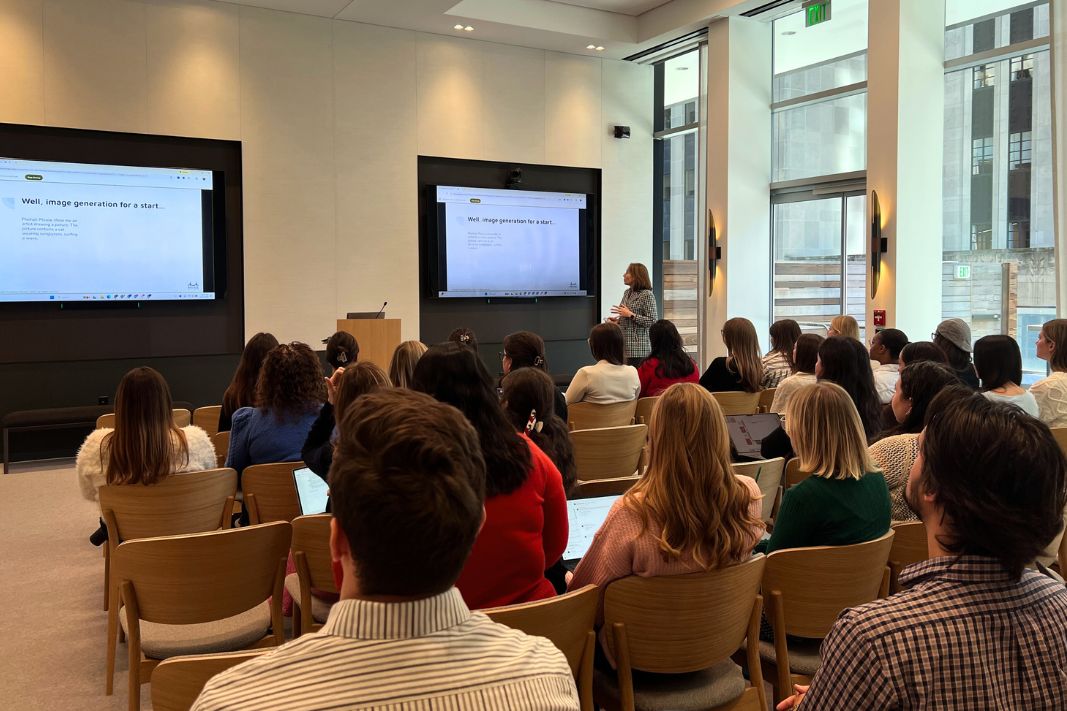
To keep stretching our own thinking, we recently went deeper with another hands-on AI workshop led by Pam Boiros, founder of Bridge Marketing Advisors, creator of Marketing AI Jumpstart and founding member of Women in AI. Building on our earlier perspective, this session focused on the how: practical prompt engineering, smarter workflows, and the guardrails communicators need to protect trust while they experiment.
Here are some of the biggest takeaways, along with actionable advice for communicators who want to harness AI with purpose, without losing sight of what matters most: expertise, creativity, and credibility.
AI Progresses Fast, but the Fundamentals Remain
Since our last update, AI capabilities, especially in image and video generation, have leapt forward. “Hollywood-level” video can now be generated from a prompt, and tools like ChatGPT, Google Gemini, and Perplexity are leapfrogging each other in their abilities to answer complex questions, create content, and analyze data.
But not everything has changed. AI is still far from perfect: it fabricates facts and images (as illustrated by tools inventing months like "Nectober" on a calendar!), and reliable expertise and discernment remain human strengths that tools can’t replicate.
The Real Power Is AI + Human, Not AI Instead of Human
A recurring theme in our conversation was that AI is at its best when partnered with human guidance, not as a replacement. One example that Pam highlighted: combining AI with radiologists improves diagnostic accuracy far more than either can achieve alone. For communicators, this means using AI to speed up research, develop first drafts, and automate repetitive tasks, freeing them up for the nuanced, client-specific, creative, and strategic work that builds brands and protects reputations.
Communications Is Being Redefined by Search…and by Black Boxes
One of the most dramatic shifts is how people are now using AI platforms like ChatGPT, rather than Google, as a primary search or discovery tool. This upends years of effort and dollars spent on SEO, because LLMs surface information differently than traditional search engines.
The lesson for brands? Focus on creating authentic, useful, and regularly updated content that’s easy for both humans and AIs to access and understand. FAQs, thought leadership and high-quality owned content matter more than ever.
Policy, Ethics, and Verification are Non-Negotiables
With opportunity comes responsibility. As AI-generated content proliferates, so do risks around errors, bias, confidentiality, and brand image, especially amid growing concerns about copyright, “deepfakes,” and rapidly evolving legal and regulatory standards (see the ongoing lawsuits from the New York Times against OpenAI and Perplexity).
Our approach:
- Have an AI charter and strictly adhere to it like our agency’s “AI-powered and human-led” values, especially regarding proprietary or confidential info.
- Always vet AI output by reviewing links, checking facts, and, most importantly, making it specific and meaningful for the brand and its audience.
- Watch for signs of AI-generic “work slop.” Just because the content sounds decent, it may lack substance or original insight.
- Proactively address bias, using clear prompts and review cycles to ensure inclusivity and relevance.
How to Use AI in Your Communications Practice Today
But this doesn’t mean you shouldn’t use AI. In fact, there are several productive ways to use it and Pam outlined it perfectly:
- Research & Summarization: Use tools like Perplexity and ChatGPT to scan news, analyze competitors, summarize press releases, or generate initial content drafts but double-check everything.
- Prompt Engineering: Don’t settle for generic prompts. The more context provided, the better the results and AI can even help you write better prompts for complex projects.
- Bias & Inclusion: Make fairness and diverse perspectives explicit in your prompts and review output for stereotypes or gaps.
- Be Authentic: The most powerful communications in an AI-saturated world are those that are specific, human, and true to the brand’s voice.
- Stay Updated: The tool landscape, regulatory environment, and “best practices” are all evolving, so it’s important to read, experiment, and talk openly to continue to advance learning and applications.
AI is the most significant change to the communications field. But its greatest potential lies in pairing it with experienced professionals who can guide its use, assess its output, and ensure brands don’t lose their unique voices amid all the noise.
As our agency continues to pilot new tools and approaches, the focus is clear: to empower our team and our partners with the best of AI while remaining true to the fundamentals of trust, authenticity, and meaningful storytelling.
What our clients say

Ameresco
Leila Dillon, SVP, Corporate Marketing and Communications
It's clear that the Greenough Communications team has a deep understanding of the clean tech and climate transition spaces. Within the first month of working together, they were able to land interviews with The Washington Post, The New York Times and Canary Media, just to name a few! Since working together, we've seen our media coverage and quality increase significantly across the board. We value Greenough's partnership are looking forward to our continued work together.

Boston Micro Fabrication
Laura Galloway, Marketing Director
As a small marketing team, having an agency partner that feels like a true extension of my team is invaluable. The Greenough Communications team is professional, responsive and has taken the time to understand our business, putting our brand in front of the customers who matter for our growth. I’ve been very happy with our first year of partnership and look forward to future success.

Acrolinx
Mariana Just, Vice President, Marketing
We started working with Greenough Communications over a year ago, and it's been a fantastic journey. They really understand who we are at Acrolinx and what we want to say. Their ability to amplify our message in a crowded AI space has been impressive, delivering solid media results in the outlets that matter, securing the AI Breakthrough Award, and boosting our executive team's social media presence. As we continue our partnership, we're excited about expanding our reach and market presence, building upon our refreshed positioning and messaging with Greenough's expertise guiding us every step of the way.

IQE
Steven Curwood, Director of Corporate Marketing
At IQE, one of our goals is to demystify the vital role compound semiconductors play in the industry and the future of innovation. As we aim to broaden our brand's reach in the U.S. market, finding an agency that understands our technology and the intricacies of our work is crucial. Greenough Communications stood out as that agency from the start. In the short time we've worked together, they've already validated our choice with opportunities in key media, including CNBC, NPR, and the U.S. trade media that will move the needle for our brand and message. There's much ahead for us, and we're excited to have the Greenough team by our side.

Arbella Insurance
John Donohue, CEO
Our Greenough team has excelled in learning our business and our challenges and has been extremely effective in developing and executing a PR strategy that helps drive our success.

Wolters Kluwer Health
André Rebelo, Global Marketing Communications & Public Relations
Our Greenough team has been a strategic asset in sustaining targeted growth in our PR and external communications. The team really operates like an extension of our internal team, aligned and effective. They've deftly balanced the needs of multiple sub-groups' objectives and needs, getting great results in the publications our customers read.

GlobalFoundries
Laurie Kelly, Chief Communications Officer
Greenough Communications has been more than just a PR agency for us at GlobalFoundries; they've been true partners. From navigating our IPO to driving impactful education campaigns like the one leading up to the passage of the CHIPS Act, they've been instrumental in showing the world our leadership role in this new technology era. Their knack for building connections with the industry and our team, including our executives, has been impressive. Every year, we throw new challenges their way, and they keep delivering. As we move ahead together, we're excited to keep pushing the boundaries, sharpening our brand narrative, and taking our brand awareness to the next level.

Integrated Marketing
Content Development
Public Relations
Brand Strategy
Integrated Marketing
Content Development
Public Relations
Brand Strategy
Public Relations
Brand Strategy
Integrated Marketing
Content Development
Public Relations
Brand Strategy
Integrated Marketing
Content Development
Let's start a project together.

