
JPM 2026: 5 Life Sciences Trends That Set the Tone for the Year Ahead

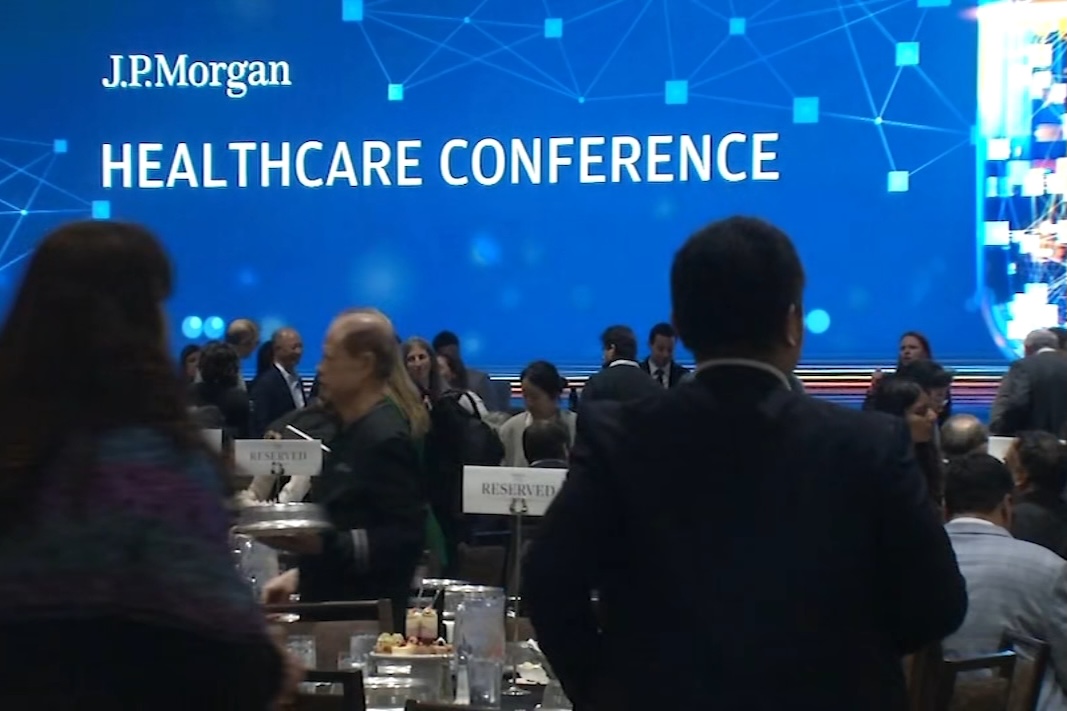
At the start of the year, the J.P. Morgan Healthcare Conference serves as a real-time barometer for what’s changing across biopharma, medtech, healthcare delivery, and the capital markets. And while some claim this year was a slower news cycle, the dialogue pointed to a sector that is simultaneously recalibrating and re-accelerating.
Below are five themes that stood out most, and what they mean for healthcare and life sciences companies as we move through 2026.
1) The AI era is here, but impact expectations are budding
Unsurprisingly, AI was a consistent throughline at JPM 2026, not just in marketing presence but in real commercial engagement. The narrative surrounding AI is moving from what’s possible to what happened. Some participants envisioned a world where AI enables end-to-end real-world evidence, where integrating AI with massive healthcare data offers transformative opportunities for better, faster patient-centered outcomes.
Conference discussions noted that pharma companies are putting meaningful dollars (e.g., tens of millions) behind AI partnerships, signaling a shift from experimentation (or the pilot phase) toward capability-building, where AI is embedded where data lives.
At the same time, the tone has matured. Leaders and reporters emphasized that AI’s near-term impact can be overstated, and that the hardest part is often not the models, but the data quality, interoperability, perceived trust, and training sets.
What it means in 2026
- For biopharma: The competitive advantage won’t be, “we use AI,” but it will be focused on how well you operationalize it, through data access, governance, fit-for-purpose endpoints, and change management. This includes AI’s ability to move users from “why” to “what-if” in minutes, while preserving traceability as a trust mechanism.
- For healthcare: In the near term, AI’s biggest win may be augmenting clinicians, strengthening diagnostic support and streamlining trial operations, rather than replacing physicians.
- For communicators: Expect skepticism. The most credible storylines will be specific, measurable, and humble. We can expect headlines that focus on where AI helps today (trial enrollment, molecule optimization, admin workflows) versus where it’s still early. There’s also an underlying challenge of getting to an answer that’s worth presenting, where the first answer may not always be the best.
2) Regulatory uncertainty—especially around the FDA—has become a front-and-center business risk
A striking moment at the conference came from former top FDA regulator Dr. Rick Pazder, who described “chaos at the FDA” and warned the industry may not fully appreciate how serious the situation is. The conversation also surfaced concern about mechanisms like a commissioner’s voucher program, framed as a faster approval pathway that could blur the firewall between politics and the agency.
In other words: regulatory stability, often assumed as background infrastructure, was discussed as an active variable companies may need to plan around in 2026.
What it means in 2026
- For drug developers: Build regulatory scenario planning into corporate strategy and investor messaging. “We’ll just execute our PDUFA plan,” is no longer sufficient as a narrative.
- For commercial teams: Market access and launch planning may need added contingencies (timelines, labeling expectations, post-market commitments).
- For communicators: This is a year for disciplined credibility when it comes to claims and planning: tight substantiation, clean language around evidence thresholds, and proactive issues preparedness.
3) China’s biotech rise is no longer a subplot; it’s shaping valuation, partnering, and trial strategy
Multiple discussions described a “quiet but significant” Chinese presence in partnering, and a broader sense that the sector is entering an era of hyper-competition. Reporters noted that China is increasingly viewed as an appealing place to run earlier-stage trials, and that U.S./EU companies now routinely see Chinese “comparables” that influence perceived differentiation and value.
What it means in 2026
- For biopharma BD: Differentiation standards are rising. Companies should be ready to answer: Why this asset? Why this mechanism? Why will it win globally?
- For clinical strategy: More companies will evaluate China as part of a faster development path while navigating geopolitical, IP, and reputational considerations.
- For communicators: Be prepared to articulate your competitive moat (data, endpoints, manufacturing, regulatory path, real-world evidence plans) in plain language, not just scientific novelty.
4) Capital markets are thawing: IPO optimism, selective funding, and the “next generation” of commercial biotechs
JPM 2026 carried a more constructive investment tone than many expected. There was “a pretty firm feeling” that more biotech IPOs could return in 2026 (even if not at 2020–2021 levels), and a sense that funding availability is improving, though with more scrutiny about how money is spent.
Importantly, investors and media conversations also highlighted the emergence of a new class of biotech company, one that can develop and commercialize drugs to create profitable, durable businesses (not just platform stories).
What it means in 2026
- For leadership teams: The bar is higher for “IPO-ready.” Messaging should map cleanly to commercial reality: market sizing, pricing/access assumptions, rollout plans, and evidence generation.
- For startups: Expect continued selectivity. Capital will chase clearer mechanisms, cleaner data, and operationally sharp teams.
- For communicators: This is a moment to refresh core narratives from science-first to value-first, without losing scientific rigor.
5) Life sciences companies are inching toward “healthcare delivery” through data, services, and support models
A forward-looking theme also emerged: biotech’s evolution beyond pills and vials into data-enabled patient support and “comprehensive” service layers. Life science leaders described a future where biologic companies become more like healthcare delivery companies, enabled by improved patient data, physician support services, and infrastructure.
This aligns with broader conference conversations about access, channels, and direct engagement, plus the operational reality that scaling innovation increasingly requires scaling the experience around it.
What it means in 2026
- For biopharma: Expect rising expectations to demonstrate you can deliver outcomes and support adherence, navigation, affordability, and real-world performance.
- For healthcare stakeholders: More overlap (and sometimes tension) between manufacturers, providers, and payers as companies expand the “wraparound” layer of care.
- For communicators: Companies should clearly define the line between support and delivery, and be transparent about how data is used, protected, and governed.
An Additional AI-Related Tidbit
Agentic AI is transforming workflows across industries by enabling autonomous task completion and intelligent workforce redesign, rather than simply accelerating existing tasks. As we know, in healthcare, AI adoption has surged, with organizations using generative AI and implementing agentic AI, particularly to enhance AI scribes and revenue cycle management; providers also benefit as AI reduces administrative burdens in fee-for-service models. In the pharma space, early adoption of agentic AI is supporting a range of functions, especially drug discovery, with a vision of continuous, 24/7 AI-driven research labs that improve innovation and efficiency.
As Arif Nathoo, CEO and Co-founder of Komodo Health said when referring to AI, “This is a world that we live in now.” The sentiment is clear, when implemented correctly, AI will (hopefully) work in ways you’ve never been able to before.
Conclusion
JPM 2026 underscored a sector shifting from hype to execution: AI is becoming an operating capability (with credibility hinging on measurable outcomes), regulatory uncertainty is now a real business risk, China’s biotech ascent is resetting competitive benchmarks, capital markets are cautiously reopening with higher bars for differentiation and commercial readiness, and biopharma is expanding beyond therapies into data-enabled services and patient support that drive real-world outcomes. As the conference underscored, this is no longer a future-state conversation. This is the world we’re operating in now, and the organizations that align strategy, execution, and narrative will set the pace for the year ahead.
What our clients say

Ameresco
Leila Dillon, SVP, Corporate Marketing and Communications
It's clear that the Greenough Communications team has a deep understanding of the clean tech and climate transition spaces. Within the first month of working together, they were able to land interviews with The Washington Post, The New York Times and Canary Media, just to name a few! Since working together, we've seen our media coverage and quality increase significantly across the board. We value Greenough's partnership are looking forward to our continued work together.

Boston Micro Fabrication
Laura Galloway, Marketing Director
As a small marketing team, having an agency partner that feels like a true extension of my team is invaluable. The Greenough Communications team is professional, responsive and has taken the time to understand our business, putting our brand in front of the customers who matter for our growth. I’ve been very happy with our first year of partnership and look forward to future success.

Acrolinx
Mariana Just, Vice President, Marketing
We started working with Greenough Communications over a year ago, and it's been a fantastic journey. They really understand who we are at Acrolinx and what we want to say. Their ability to amplify our message in a crowded AI space has been impressive, delivering solid media results in the outlets that matter, securing the AI Breakthrough Award, and boosting our executive team's social media presence. As we continue our partnership, we're excited about expanding our reach and market presence, building upon our refreshed positioning and messaging with Greenough's expertise guiding us every step of the way.

IQE
Steven Curwood, Director of Corporate Marketing
At IQE, one of our goals is to demystify the vital role compound semiconductors play in the industry and the future of innovation. As we aim to broaden our brand's reach in the U.S. market, finding an agency that understands our technology and the intricacies of our work is crucial. Greenough Communications stood out as that agency from the start. In the short time we've worked together, they've already validated our choice with opportunities in key media, including CNBC, NPR, and the U.S. trade media that will move the needle for our brand and message. There's much ahead for us, and we're excited to have the Greenough team by our side.

Arbella Insurance
John Donohue, CEO
Our Greenough team has excelled in learning our business and our challenges and has been extremely effective in developing and executing a PR strategy that helps drive our success.

Wolters Kluwer Health
André Rebelo, Global Marketing Communications & Public Relations
Our Greenough team has been a strategic asset in sustaining targeted growth in our PR and external communications. The team really operates like an extension of our internal team, aligned and effective. They've deftly balanced the needs of multiple sub-groups' objectives and needs, getting great results in the publications our customers read.

GlobalFoundries
Laurie Kelly, Chief Communications Officer
Greenough Communications has been more than just a PR agency for us at GlobalFoundries; they've been true partners. From navigating our IPO to driving impactful education campaigns like the one leading up to the passage of the CHIPS Act, they've been instrumental in showing the world our leadership role in this new technology era. Their knack for building connections with the industry and our team, including our executives, has been impressive. Every year, we throw new challenges their way, and they keep delivering. As we move ahead together, we're excited to keep pushing the boundaries, sharpening our brand narrative, and taking our brand awareness to the next level.

Integrated Marketing
Content Development
Public Relations
Brand Strategy
Integrated Marketing
Content Development
Public Relations
Brand Strategy
Public Relations
Brand Strategy
Integrated Marketing
Content Development
Public Relations
Brand Strategy
Integrated Marketing
Content Development
Let's start a project together.

