
Reflections From The Boston Globe’s Rare Disease Summit

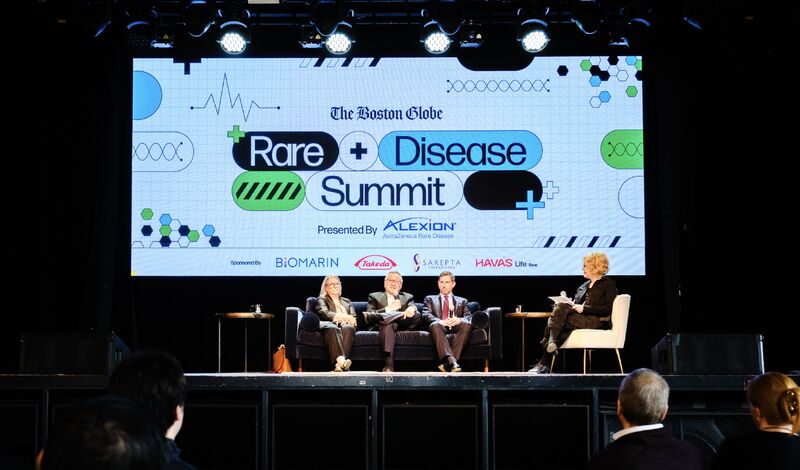
Earlier this week, I had the honor of attending The Boston Globe’s second annual Rare Disease Summit. Despite a blizzard blanketing the region, the Globe’s staff and conference organizers pulled off an inspiring and educational event — kudos to them for making it happen virtually!
I attended both as a PR professional working in biotech and pharma and as someone with a personal connection to rare disease and the medical field. I previously worked as a Clinical Research Coordinator at the Sean M. Healey & AMG Center for ALS at Massachusetts General Hospital, and my mom passed away from amyotrophic lateral sclerosis (ALS), a neurodegenerative disease that currently has no cure, when I was in college. The Summit brought together medical professionals, patients, researchers, government officials, and parents and left me with three themes worth sharing.
Think Zebras, Not Just Horses
The conference opened with pushback on a well-known medical aphorism coined by Dr. Theodore Woodward in the 1940s: “When you hear hooves, think horses, not zebras.” The saying teaches clinicians to diagnose based on the most common, likely cause rather than a rare one. It makes sense as a heuristic, but it has its limits.
While individual rare diseases are uncommon, they are collectively anything but. More than 30 million people in the U.S. (approximately 1 in 10 people) (source), and at least 300 million people globally live with a rare disease (source). That number grows even larger when you consider the family members and loved ones affected alongside them. Rare diseases deserve a place in the diagnostic conversation from the start.
Lived Experience Is Expertise
A recurring theme throughout the summit was the concept of lived experience and the call to treat it as a legitimate form of expertise, not just anecdote. Speaker after speaker, particularly those living with rare diseases, spoke to the ways their daily realities contain knowledge that clinical data alone cannot capture.
This connects to a concept I encountered in a medical ethics class in college: epistemic privilege — the idea that a person’s history and social position can give them access to aspects of reality that others miss. For rare disease patients who have spent years navigating misdiagnoses, limited treatment options, and systems not built with them in mind, that knowledge is hard-won. It belongs in the room.
Shared Decision-Making as Standard of Care
Shared decision-making, a collaborative process where providers and patients work together using the best available medical evidence alongside the patient’s personal values and goals, was another central focus of the summit.
Dr. Jennifer Arnold, a physician, patient, and mother living with skeletal dysplasia, put it plainly: the medical field needs more education around working with patients, and that starts with humility. Doctors willing to say something like, “I may not have all the answers, but I will work through this with you,” offer something meaningful to patients who have often felt dismissed. That kind of partnership is not a soft skill. It is good medicine.
Keeping the Patient at the Center
The summit was a good reminder that keeping the patient at the center of care is not a passive commitment. Rare Disease Day is Feb. 28, and this conference was one day, but the work does not stop there. Patients and families are living this every single day.
I’ll end with a quote from patient advocate Valeen Keefer, who was diagnosed with polycystic kidney disease at age 10, a condition that has spanned six generations of her family. Her words resonated with me:
“Rare disease doesn’t just live in the body. It lives in the in-between moments — between lab draws and life milestones, and in the quiet burdens of uncertainty, isolation, guilt and side effects. These realities don’t always show up in clinical trial endpoints or medical appointments, yet they shape every day of our lives. We are in an extraordinary time of scientific advancement, but breakthroughs become meaningful when patients are included early, often, and authentically. Not as a checkbox, but as partners. When the patient perspective shapes research and development, we ask better questions, design better solutions and measure outcomes that actually matter.”
What our clients say

Ameresco
Leila Dillon, SVP, Corporate Marketing and Communications
It's clear that the Greenough Communications team has a deep understanding of the clean tech and climate transition spaces. Within the first month of working together, they were able to land interviews with The Washington Post, The New York Times and Canary Media, just to name a few! Since working together, we've seen our media coverage and quality increase significantly across the board. We value Greenough's partnership are looking forward to our continued work together.

Boston Micro Fabrication
Laura Galloway, Marketing Director
As a small marketing team, having an agency partner that feels like a true extension of my team is invaluable. The Greenough Communications team is professional, responsive and has taken the time to understand our business, putting our brand in front of the customers who matter for our growth. I’ve been very happy with our first year of partnership and look forward to future success.

Acrolinx
Mariana Just, Vice President, Marketing
We started working with Greenough Communications over a year ago, and it's been a fantastic journey. They really understand who we are at Acrolinx and what we want to say. Their ability to amplify our message in a crowded AI space has been impressive, delivering solid media results in the outlets that matter, securing the AI Breakthrough Award, and boosting our executive team's social media presence. As we continue our partnership, we're excited about expanding our reach and market presence, building upon our refreshed positioning and messaging with Greenough's expertise guiding us every step of the way.

IQE
Steven Curwood, Director of Corporate Marketing
At IQE, one of our goals is to demystify the vital role compound semiconductors play in the industry and the future of innovation. As we aim to broaden our brand's reach in the U.S. market, finding an agency that understands our technology and the intricacies of our work is crucial. Greenough Communications stood out as that agency from the start. In the short time we've worked together, they've already validated our choice with opportunities in key media, including CNBC, NPR, and the U.S. trade media that will move the needle for our brand and message. There's much ahead for us, and we're excited to have the Greenough team by our side.

Arbella Insurance
John Donohue, CEO
Our Greenough team has excelled in learning our business and our challenges and has been extremely effective in developing and executing a PR strategy that helps drive our success.

Wolters Kluwer Health
André Rebelo, Global Marketing Communications & Public Relations
Our Greenough team has been a strategic asset in sustaining targeted growth in our PR and external communications. The team really operates like an extension of our internal team, aligned and effective. They've deftly balanced the needs of multiple sub-groups' objectives and needs, getting great results in the publications our customers read.

GlobalFoundries
Laurie Kelly, Chief Communications Officer
Greenough Communications has been more than just a PR agency for us at GlobalFoundries; they've been true partners. From navigating our IPO to driving impactful education campaigns like the one leading up to the passage of the CHIPS Act, they've been instrumental in showing the world our leadership role in this new technology era. Their knack for building connections with the industry and our team, including our executives, has been impressive. Every year, we throw new challenges their way, and they keep delivering. As we move ahead together, we're excited to keep pushing the boundaries, sharpening our brand narrative, and taking our brand awareness to the next level.

Integrated Marketing
Content Development
Public Relations
Brand Strategy
Integrated Marketing
Content Development
Public Relations
Brand Strategy
Public Relations
Brand Strategy
Integrated Marketing
Content Development
Public Relations
Brand Strategy
Integrated Marketing
Content Development
Let's start a project together.

