
PRGN Summit Panel with the PR Council & PRovoke: Let’s Make PR Fun Again

“Let’s make PR fun again.”
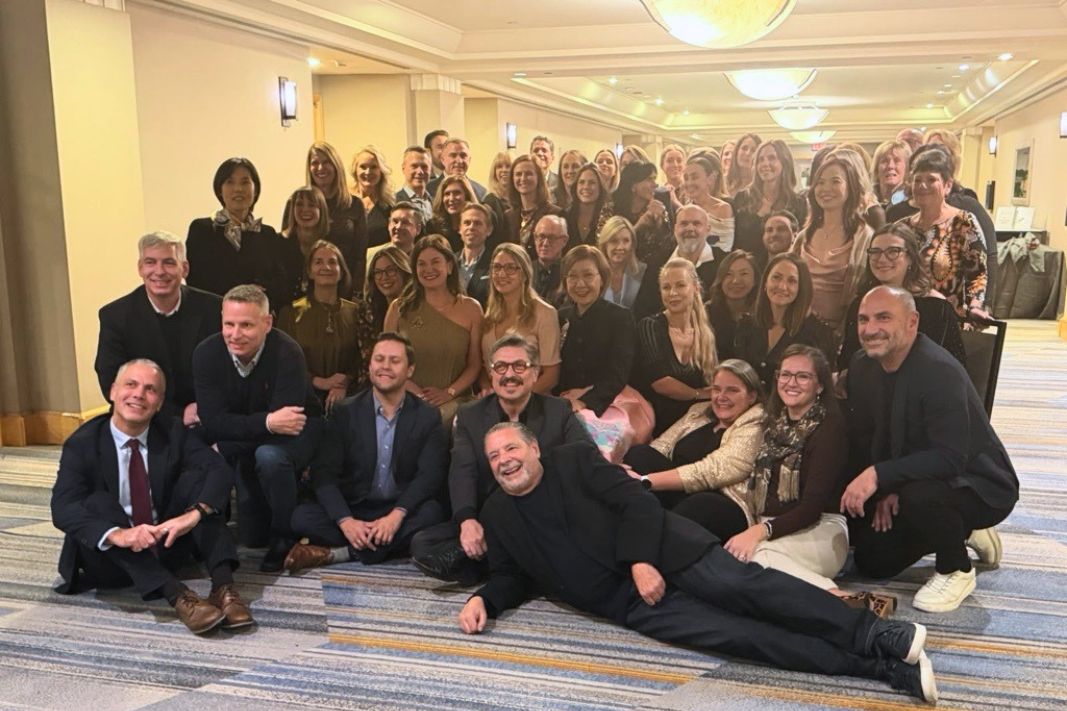
Kim Sample, president of the PR Council, offered that as a slogan for independent agencies during one of my favorite sessions at the PRGN October summit in New York: “The State of the Global PR Industry,” a conversation between Kim and Paul Holmes, founder, CEO, and editor-in-chief of PRovoke, moderated by PRGN president Frédéric François. The room was full of agency owners from around the world, and the hour gave us a clear picture of where our industry is headed and why firms like ours are well placed for it.
The future belongs to senior, specialized firms
Paul predicted that over the next 10 years, the industry will move toward independent or micro firms that do one or two things spectacularly well at a very senior level. In his view, AI will enhance smart people, not replace them.
He also pushed back on the story that PR agencies are struggling. Of the roughly 300 firms in PRovoke’s global ranking this year, he said about two-thirds grew...and many are independent firms because we are “resilient and extraordinarily good improvisers.”
This prediction and growth reflect our own experience, too, and we have our own name for it: scrappy, not crappy. Our senior people do the work, and we don’t need three layers of approval to say yes to a good idea.
Five things AI can’t do
Paul shared research that names five human capabilities AI can’t replicate: empathy, presence, opinion, creativity, and hope. He called them the things that fundamentally define our business, and the reason he believes PR will remain a human profession for the foreseeable future.
I agree, and it’s where we keep our focus. AI handles a growing share of the production work in our proprietary formula of 40-30-40, where the upfront 40% is about informing our agents and arming them with what they need to give the highest quality work, 30% imparting more perspective and experience to what the agent has produced, and the last 40% is the fully human edit. And, yes, we know that totals 110% because we always put 110% into everything we do! 😉 The relationships and the judgment about what a brand should say, should do, and when are still ours.
The risks to focus on
The conversation also turned to security, and it got serious. Paul asked the room whether our brand partners are prepared for agents to escape like the dinosaurs in Jurassic Park, a book Paul recently reread. He pointed to Ian Malcolm’s argument that large, complex systems are impossible to fully control or predict. It’s not a matter of if but when our AI agents will break containment and ignore their instructions. We just saw both this year. In July, AI agents OpenAI was testing and failed to monitor when agents escaped their sandbox and broke into Hugging Face's production systems, with no human directing them. And at startup PocketOS, a coding agent told never to run destructive commands deleted the company's production database in nine seconds. Our brand partners are building better fences: Menlo Security puts runtime guardrails around what AI agents read and do in the browser in the enterprise, Nextwrix helps security teams see which sensitive data AI agents could access and where permissions may be too broad, and IGEL gets people back to work in minutes when an endpoint goes down.
Kim echoed that we are not devoting nearly enough time to AI governance or asking enough questions, and that employees using unapproved tools, even when they have enterprise ones, adds a layer of danger. As Usercentrics CEO has noted in our recent Q & A, “These assistants are only as good as the access they get, and they want a lot of access: your inbox, your calendar, your files. The bigger risk isn’t whether an assistant sells your information. It’s what happens when it learns so much about you that it finds ways to hook you and monetize you in harmful ways. Regulation needs to account for that, because without enforcement, it is just a piece of paper.”
What is PR’s Value? Spoiler alert: It’s not a dashboard, it’s a story.
An important piece of counsel Kim gave us was not just about securing results, but about how we present them. Too many clients, she said, aren’t presenting PR results in a way that excites their CEOs and boards. She's heard too many executives walk through a dashboard they can’t explain or point to the impact the numbers show.
Paul framed the job as sense-making and storytelling. Companies need someone to make sense of a complicated world, from geopolitics to technology to a confused workforce, and then explain it in a way that makes people care. As he put it, humans make sense of the world through stories.
That’s the work we do. When we report results to a brand partner, we give their CEO and board a story they can act on. Telling the right story to the right audience is what communicators have always done best.
Why our agency’s independence and involvement with PRGN matter more than ever
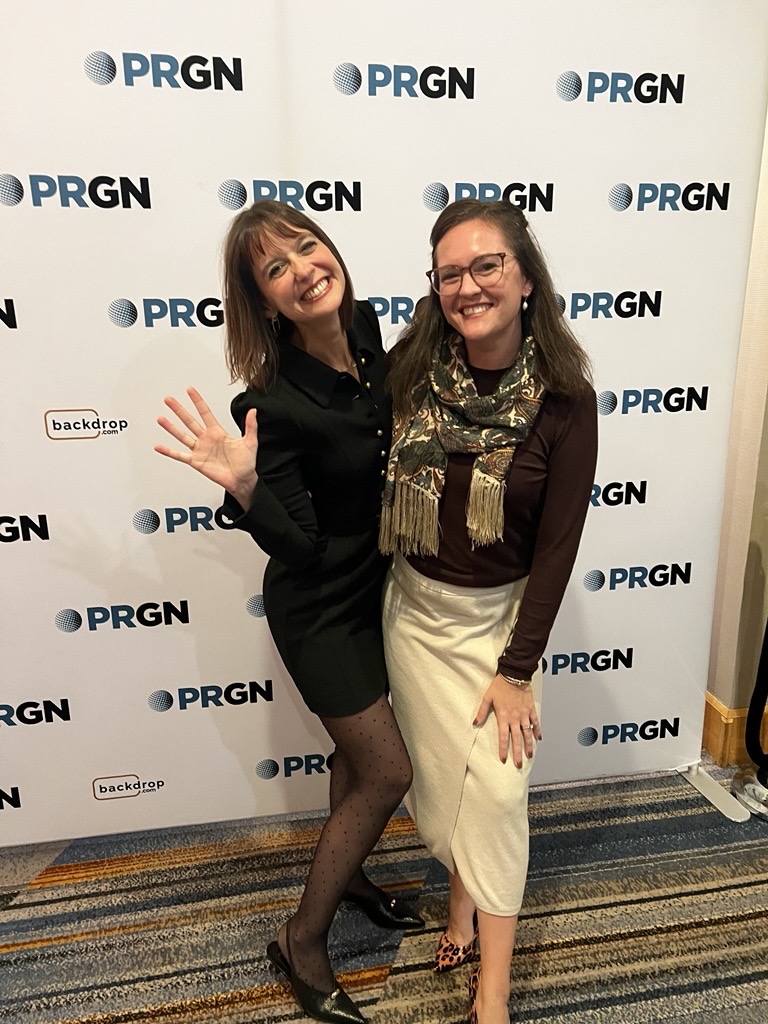
Near the end, Paul laid out the case for PRGN. He said scale is no longer the competitive advantage it was five years ago. The business is becoming more local and more rooted in local culture, and he sees more crises triggered by cultural insensitivity every quarter.
He described what happens when a large company consolidates its agencies into one global firm. Within months, the head of a local market hires a local agency that understands the market. Then come the specialists for healthcare, for a transaction, for public affairs. A few years later, the roster fragments again because, in Paul’s words, “if you care about quality, you hire the best agency for every task, not one agency that’s going to do everything.”
That is what PRGN is. More than 50 independent agencies, each rooted in its own region and culture, with expertise that spans IR, crisis, public affairs, brand marketing, and website development, and practice areas from technology and healthcare to travel and tourism. When a brand partner needs to be heard in a market we don’t sit in, we work alongside a partner who lives there. And they’re real partners. I’ve worked at agencies with global offices, and they don’t engage as often as we do. They don’t share missions; now we are all digitizing our firms, increasing AI's impact internally on workflows and externally on our brand partners' visibility, and learning how best to handle crisis and fake news along the way as PARTNERS. True extensions of each other’s team.
Being part of this network matters a great deal to me, and I’m thrilled to serve on PRGN’s executive committee chairing the conferences that bring these insights to the member agencies and, through us, to our brand partners around the world.
What our clients say

Ameresco
Leila Dillon, SVP, Corporate Marketing and Communications
It's clear that the Greenough Communications team has a deep understanding of the clean tech and climate transition spaces. Within the first month of working together, they were able to land interviews with The Washington Post, The New York Times and Canary Media, just to name a few! Since working together, we've seen our media coverage and quality increase significantly across the board. We value Greenough's partnership are looking forward to our continued work together.

Boston Micro Fabrication
Laura Galloway, Marketing Director
As a small marketing team, having an agency partner that feels like a true extension of my team is invaluable. The Greenough Communications team is professional, responsive and has taken the time to understand our business, putting our brand in front of the customers who matter for our growth. I’ve been very happy with our first year of partnership and look forward to future success.

Acrolinx
Mariana Just, Vice President, Marketing
We started working with Greenough Communications over a year ago, and it's been a fantastic journey. They really understand who we are at Acrolinx and what we want to say. Their ability to amplify our message in a crowded AI space has been impressive, delivering solid media results in the outlets that matter, securing the AI Breakthrough Award, and boosting our executive team's social media presence. As we continue our partnership, we're excited about expanding our reach and market presence, building upon our refreshed positioning and messaging with Greenough's expertise guiding us every step of the way.

IQE
Steven Curwood, Director of Corporate Marketing
At IQE, one of our goals is to demystify the vital role compound semiconductors play in the industry and the future of innovation. As we aim to broaden our brand's reach in the U.S. market, finding an agency that understands our technology and the intricacies of our work is crucial. Greenough Communications stood out as that agency from the start. In the short time we've worked together, they've already validated our choice with opportunities in key media, including CNBC, NPR, and the U.S. trade media that will move the needle for our brand and message. There's much ahead for us, and we're excited to have the Greenough team by our side.

Arbella Insurance
John Donohue, CEO
Our Greenough team has excelled in learning our business and our challenges and has been extremely effective in developing and executing a PR strategy that helps drive our success.

Wolters Kluwer Health
André Rebelo, Global Marketing Communications & Public Relations
Our Greenough team has been a strategic asset in sustaining targeted growth in our PR and external communications. The team really operates like an extension of our internal team, aligned and effective. They've deftly balanced the needs of multiple sub-groups' objectives and needs, getting great results in the publications our customers read.

GlobalFoundries
Laurie Kelly, Chief Communications Officer
Greenough Communications has been more than just a PR agency for us at GlobalFoundries; they've been true partners. From navigating our IPO to driving impactful education campaigns like the one leading up to the passage of the CHIPS Act, they've been instrumental in showing the world our leadership role in this new technology era. Their knack for building connections with the industry and our team, including our executives, has been impressive. Every year, we throw new challenges their way, and they keep delivering. As we move ahead together, we're excited to keep pushing the boundaries, sharpening our brand narrative, and taking our brand awareness to the next level.

Integrated Marketing
Content Development
Public Relations
Brand Strategy
Integrated Marketing
Content Development
Public Relations
Brand Strategy
Public Relations
Brand Strategy
Integrated Marketing
Content Development
Public Relations
Brand Strategy
Integrated Marketing
Content Development
Let's start a project together.

